
Chinese and Taoist 49 Days After Death: The 7-Day Prayers
Chinese and Taoist 49 Days After Death: The 7-Day Prayers Explained
When a loved one passes away, the funeral is only the start of the family’s duties. For many Chinese families in Singapore, the weeks that follow are just as important. This guide explains what happens in the 49 days after death in Chinese and Taoist custom, so you know what to expect and how to plan each prayer.

In Chinese and Taoist custom, the 49 days after death are a period of prayer for the soul’s journey. Families hold a rite every seven days, believe the soul returns home on the 7th day, and keep a home altar with daily offerings. The 49th day completes the cycle, and many families hold a further rite on the 100th day.
What Happens in the 49 Days After Death
Taoists believe the soul is reborn within 49 days of death and is judged on its conduct during this time. The prayers held by the family are meant to help the soul receive a kind judgement and move on peacefully.
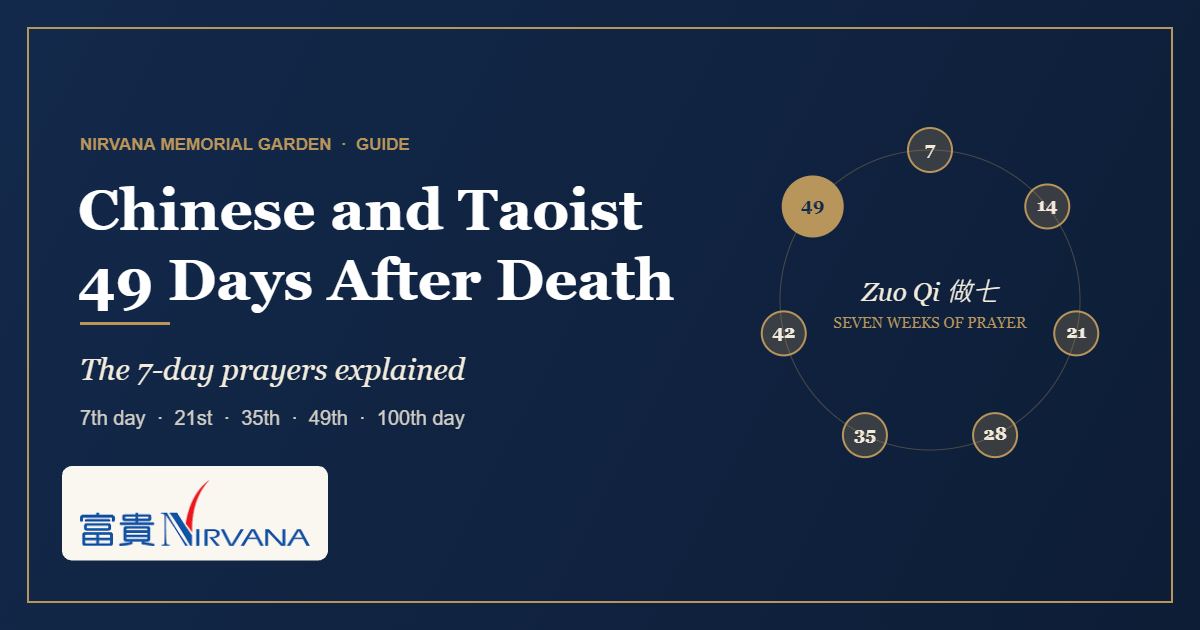
Many Chinese families in Singapore follow a blend of Taoist, Buddhist and folk customs. The 49 days are counted in seven weeks of seven days, a cycle known as Zuo Qi (做七). Practices differ between dialect groups and families, so the details below describe common practice rather than one fixed rule.
The 7th Day: When the Soul Returns Home
Many in the Chinese community believe the soul returns to the world of the living on the seventh day, known as tou qi (头七). The National Heritage Board notes that families prepare a meal, keep the rice container filled to the brim and keep the house in order for the soul’s visit.
Some families scatter flour or ash near the altar and look for footprints the next morning as a sign of the visit. The Cantonese community holds that the exact day of return depends on the dates and times of birth and death, so a Taoist priest is often asked to work out the date.
The Seven Sevens: How the Weekly Prayers Work
Many Chinese families observe a 49-day period and pray for their loved one every week during that time. Each seventh day is a milestone in the soul’s journey.
Prayers are commonly recited on the 7th, 21st, 35th and 49th days, and for Taoist families the dates may differ by dialect group. The 21st day (三七), 35th day (五七) and 49th day (七七) are often marked with longer prayers led by a Taoist priest or monks, with simple daily offerings in between. Your funeral director, temple or priest can help you work out the dates.
Settling the Spirit at Home or at a Temple

During the 49 days, the spirit tablet of the deceased is placed on an altar. When this is done at home it is called An Ling (安灵), which means settling the spirit. Families set up a table for the tablet, a photo of the deceased, a joss pot and offerings, and offer food, drink and joss sticks daily until the 49 days are complete.
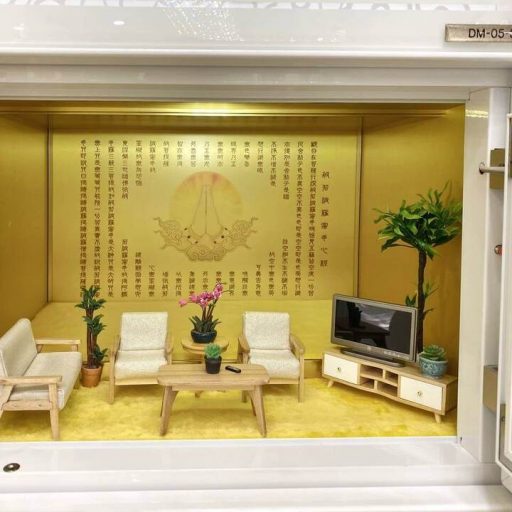
Families who prefer, or whose home has limited space, can place the tablet at a temple, monastery or columbarium instead. This is called Ji Ling (寄灵), and the incense and food offerings are made every day on the family’s behalf. Nirvana Memorial Garden offers Ji Ling at our columbarium, with daily offerings through the 49 days. After the 49 days, many families move the tablet to a permanent home, such as an ancestral pedestal.
The 49th Day: Completing the Prayers
The 49th day is the key milestone that concludes the major rites for the deceased’s transition. The family gathers for a final set of prayers, often with a Taoist priest, to see the soul safely on its way.
Many families also visit the columbarium niche or grave on this day to offer incense and flowers. It is a quiet, meaningful moment for the family to say goodbye after seven weeks of prayer.
After the 49 Days: The 100th Day and Beyond
Many Taoist families also hold rites on the 7th, 49th and 100th days after a death. The 100th day often marks the close of the main mourning period.
After this, the family remembers the deceased at set times through the year, such as the first death anniversary and Qing Ming in early April. Our prayer services page lists the rites that follow, from the 100th day to the third year and the ending of mourning.
How the Taoist and Buddhist 49 Days Differ
Both traditions keep the 49 days and pray every seven days, but the meaning behind them differs. In Taoist belief, the soul passes through judgement in the underworld, and the priest’s prayers ask the deities for a kind outcome. In Buddhist belief, the 49 days are an in-between state before rebirth, and the chanting helps the deceased towards a good rebirth.
The rites look different too. Taoist prayers are led by Taoist priests, often chanted in the family’s dialect, while Buddhist prayers are chanted by monks or nuns. You can read more in our guide to the 49 days of mourning in Buddhism and our guide to Taoist funerals in Singapore.
Arranging the 49-Day Prayers with Our Team
Our team arranges prayer services for families through the 49 days, including Zuo Qi on every seventh day, settling the spirit at home (An Ling) and Ji Ling at our columbarium. We help you count the dates, book the priest or monks and prepare the altar, so your family can focus on remembering your loved one.
If you are planning a resting place as well, you are welcome to visit our columbarium in Choa Chu Kang. WhatsApp or call us on +65 9684 2263 for the latest price list and promotions, or to book a site visit.
Frequently Asked Questions

Many Chinese families believe the soul returns home on the 7th day, called tou qi. The family prepares a meal, keeps the rice container full and keeps the home tidy for the visit. Some families scatter flour or ash to look for footprints.
The 49 days run in seven weeks of seven days from the death. Prayers are commonly held on the 7th, 21st, 35th and 49th days, and Taoist dates may vary by dialect group. A funeral director, temple or priest can help you work out the exact dates.
The tablet can be kept at home (An Ling) with daily offerings, or placed at a temple, monastery or columbarium (Ji Ling), where offerings are made for the family. Both are common in Singapore.
Many families hold a further rite on the 100th day, which often closes the main mourning period. The family then remembers the deceased on the death anniversary and at Qing Ming, and many move the tablet to a home altar or an ancestral pedestal.


Click on the link to find out more about our services and products. Chat with our sales representatives today!
Nirvana Homepage
About Nirvana Memorial Singapore
Columbarium
Nirvana Pedestal
Nirvana Funeral Service
Nirvana Prayer Service
WhatsApp Us Now!

 English
 Chinese