
Taoist Funeral Singapore: Rites, Customs and Etiquette
Taoist Funeral Rites in Singapore: A Family Guide
A Taoist funeral is one of the most traditional farewells in Singapore. Its rites, many of them carried out in dialect, are meant to guide the deceased safely through the afterlife and to help the family fulfil its duties of filial piety.
This guide explains the main rites of a Taoist funeral in Singapore, who performs them, the paper offerings, the customs that differ between dialect groups, what happens after the funeral and how visitors can show respect at a Taoist wake.

A Taoist funeral in Singapore is led by Taoist priests who perform rites such as opening the road and keeping vigil over a wake of three to seven days. Customs vary by dialect group. Nirvana Memorial Garden’s 24-hour funeral team in Choa Chu Kang can help families arrange the rites and a final resting place.
What Makes a Funeral Taoist
A Taoist funeral is led by Taoist priests, often called nam mo lo (喃呒佬). Through chanting and ritual, they guide the deceased through the Ten Courts of Hell towards a peaceful afterlife. The funeral director works alongside them, arranging the wake, the procession and the many details in between.
In practice, many Chinese families in Singapore combine Taoist, Buddhist and folk customs, and the exact rites depend on the family’s dialect group and wishes. The National Heritage Board records these practices together as part of Singapore’s intangible cultural heritage (Roots.gov.sg).
For the wider picture of Chinese funeral customs, see the tradition of a Chinese funeral.
The Main Rites During the Wake
Three rites mark the start of most Taoist wakes:
- Opening the road (开路, kai lu): the priest opens the road to the netherworld and calls the spirit to the wake. Rites of salvation follow over the next few days.
- Chanting on the first night (倒头经, dou tou jing): the priest chants so the deceased can recognise the death and begin the journey.
- Keeping vigil (守灵, shou ling): family members guard the body, offer food and drink each day and take part in rites that guide the deceased through the Ten Courts of Hell. The vigil usually lasts three to seven days.
Hell-Breaking and Other Special Rites
Some rites are performed only in particular circumstances:
- Hell-breaking (破地狱, po di yu) is held for untimely or violent deaths, to free the soul from the Court of Unjust Deaths. Priests run and leap over a fire past a paper model. It is mostly associated with Cantonese families, and Hakka families use large sand dragons in the rite.
- Buying water (担幡买水, dan fan mai shui): the eldest son carries a banner to a river to “buy” water to clean the body. Today it is mostly symbolic, as a licensed embalmer prepares the body.
- Raising the son-in-law banner (起旐, qi zhao): the son-in-law leads the hearse with a red banner on the funeral day.
Paper Offerings and Ritual Objects

Offerings help the deceased on the journey and in the afterlife:
- Paper money, such as 金银纸 (jinyin zhi), 溪钱 (xi qian, river money) and 往生钱 (wang sheng qian), burned to pay for the journey.
- Paper houses, cars and clothes, so the deceased can keep familiar comforts.
- Two pairs of white lanterns hung at the wake, with the deceased’s age written on the larger pair.
- A burial garment (寿衣, shou yi), with a pearl placed between the lips.
Funeral companies supply most of these items, so ask your funeral director which ones your family’s custom calls for.
Taoist Funeral Singapore Customs by Dialect Group
Many Taoist rites in Singapore are performed in dialect and follow the customs early migrants brought with them. A few differences recorded by the National Heritage Board:
- Teochew families do not practise the raising of the son-in-law banner, unlike most other dialect groups.
- Hokkien families do not keep the banner after the funeral, while Cantonese families take it home, without the printed wording, for use as a baby carrier.
- Cantonese families are most often associated with hell-breaking; Hakka families use sand dragons in the rite.
If the family has members from more than one dialect group, agree on the customs early with the priest and the funeral director.
After the Funeral: The Soul's Return
Many families believe the soul returns home on the seventh day after death, known as tou qi (头七) or the day of the soul’s return (回魂日, hui hun ri). The family prepares a meal and keeps the rice container full. Priests may calculate the date, time and direction of the return, and candles are lit to guide the soul home. Cantonese families believe the timing depends on the dates and times of birth and death (Roots.gov.sg).
After the burial or cremation, a temporary altar is usually kept at home for some weeks, with food and incense offered. Families continue to remember their loved ones during Qing Ming and the Hungry Ghost Festival.
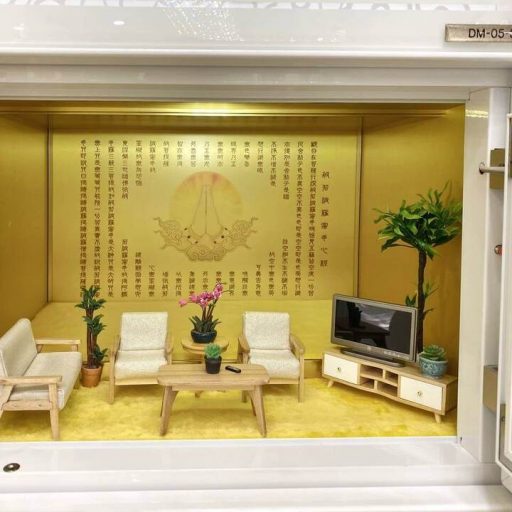
A niche or an ancestral pedestal gives the family a lasting place for these visits.
Etiquette for Visitors at a Taoist Wake
If you are attending a Taoist wake in Singapore:
- Dress soberly, in white, black or muted colours. Avoid red and bright colours.
- Offer condolence money (帛金, bai jin) in a white envelope, if you wish, at the registration table.
- Follow the family’s lead on incense and bowing, and keep quiet during the priest’s rites.
- Stay for a while; families value the company of visitors during the vigil.
Our guides on how to prepare for a Chinese funeral and what to do after attending a Chinese funeral cover more of the customs.
Planning a Taoist Funeral with Nirvana
Nirvana Memorial Garden Singapore is at 950 Old Choa Chu Kang Road. Our 24-hour funeral services team can help your family plan a Taoist funeral, work with the priests on the rites your family follows, and choose a niche or an ancestral pedestal at the Nirvana Memorial Garden columbarium.
Call us any time on +65 9684 2263, or WhatsApp us to ask a question or book a site visit.
Frequently Asked Questions

The wording on the red son-in-law banner is written in black when the deceased was under 100 years old, and in gold when the deceased lived to 100 or more, according to the National Heritage Board.
Descendants keep their mourning clothes on until the deceased has been buried or cremated. That moment is marked by the funeral notice, known as the sang pang, so families watch for it.
When a young husband dies, the widow breaks the comb used at their wedding. She keeps one half, or places both halves in the coffin if she plans to remarry, as recorded by the National Heritage Board.
Lor Kor is a brass drum band that plays during the funeral to ward off evil and send off the deceased. Teochew and Hokkien Lor Kor bands follow different styles, reflecting their dialect traditions.


Click on the link to find out more about our services and products. Chat with our sales representatives today!
Nirvana Homepage
About Nirvana Memorial Singapore
Columbarium
Nirvana Pedestal
Nirvana Funeral Service
Nirvana Prayer Service
WhatsApp Us Now!

 English
 Chinese